Author: Andy

  • Bucket Or Carboy For Secondary Fermentation?

    Bucket Or Carboy For Secondary Fermentation?

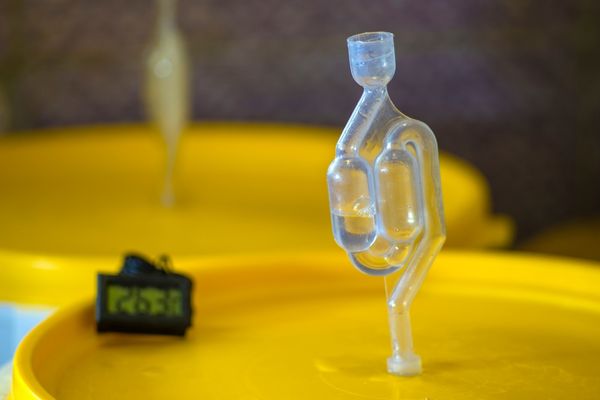
    You’ve brewed your first batch, and it’s now time to move on to the secondary fermentation process. But the question pops up: is a bucket or carboy better for secondary fermentation?. In simple terms, both buckets and carboys have their pros and cons. It all depends on your specific brewing needs and preferences. Personally, I…

  • How Long Does It Take For Beer To Get Cold In The Freezer?

    How Long Does It Take For Beer To Get Cold In The Freezer?

    Have you ever found yourself with a warm beer in hand, impatiently waiting for it to chill in the freezer? We’ve all been there, and the question on everyone’s mind in such a moment is: How long does it take for beer to get cold in the freezer? The answer is that it takes approximately…

  • How Long Can You Keep Beer In A Secondary Fermenter?

    How Long Can You Keep Beer In A Secondary Fermenter?

    The question “how long can you keep beer in a secondary fermenter?” is one that every home brewer will face at some point in their brewing journey. It’s a question I’ve grappled with throughout my own brewing experience, and the answer is both simple and complex. In general, you can keep beer in a secondary…

  • What Do You Get If You Distill Mead?

    What Do You Get If You Distill Mead?

    Mead, the ancient alcoholic beverage made from fermented honey, holds a special place in the hearts of many brewers. If you’re like me, you’ve probably spent countless hours and numerous batches perfecting your recipe, enjoying the sweet, complex flavors of mead. But have you ever wondered, “What do you get if you distill mead?“ The…

  • When To Rack Mead?

    When To Rack Mead?

    Hello fellow mead enthusiasts! Racking your mead is an important step in the mead brewing process that can significantly impact the quality of your final product. It’s a common question among both newbies and seasoned brewers – so when is the right time to rack your mead? The best time to rack your mead is…

  • 5 Ways To Stabilize Mead!

    5 Ways To Stabilize Mead!

    Mead, the world’s oldest known alcoholic beverage, is made by fermenting honey with water and occasionally adding fruits, spices, grains, or hops. Despite its ancient roots, it can be a challenging drink to perfect, particularly when it comes to stabilization. What does it mean to stabilize mead? Mead stabilization is the process of halting fermentation…

  • When To Use Pectic Enzyme In Mead Brewing? (Do you need it?)

    When To Use Pectic Enzyme In Mead Brewing? (Do you need it?)

    Mead has been a cherished beverage for thousands of years, enjoyed by ancient civilizations and modern societies alike. As avid mead home brewer, I’ve been fascinated by the alchemy-like process of turning honey, water, and yeast into a delicious, intoxicating libation. One of the questions I often get from budding mead makers is: When do…

  • Making Brandy Without Distilling

    Making Brandy Without Distilling

    Brandy, a spirit traditionally made by distilling wine, is a beloved drink worldwide. But what if I told you that you could make brandy without the complex, expensive process of distillation? Yes, it is possible to make something close to brandy without heat distilling. You can approximate real brandy by adding neutral already distilled spirits…

  • 5 Reasons Why Your Cider Stops Fermenting (And 5 Solutions!)

    5 Reasons Why Your Cider Stops Fermenting (And 5 Solutions!)

    As a seasoned brewer, I have had my fair share of challenges and triumphs when it comes to crafting the perfect cider. One of the most common problems I encountered when I started out, and a question that I often get from fellow brewers, is: Why did my cider fermentation suddenly stop? There are several…

  • What Temperature Kills Yeast In Wine?

    What Temperature Kills Yeast In Wine?

    As a brewer, I’ve been asked many times about the temperature needed to kill yeas in winemaking. Understanding the right temperature for yeast is critical because it’s the main driving force behind fermentation process. When the temperature is too high, you risk killing the yeast, and when it’s too low, the yeast may become inactive.…