Category: All Articles

  • Are Barleywines Carbonated?

    Are Barleywines Carbonated?

    Yes, barleywines are carbonated but the level of carbonation may vary depending on the brewer’s preference, style, and methods. On average, Barleywines have carbonation levels ranging from 1.5 to 2.3 volumes of CO2. That is somewhat lower than the average beer especially lagers. In comparison, some popular beers like Budweiser or Heineken contain 2.7 and…


  • How Long Can I Put Sparkling Wine In The Freezer?

    How Long Can I Put Sparkling Wine In The Freezer?

    Having been in the world of brewing for several years, I have often been asked about the optimal storage methods for various types of beverages. One question that frequently comes up is: “How long can I put sparkling wine in the freezer (without damaging the bottle)?” The short answer: Ideally, no more than 1-2 hours.…

  • How Much Amylase To Use In Brewing?

    How Much Amylase To Use In Brewing?

    Hello fellow brewing enthusiasts! Today, I’ll be sharing my experience and knowledge on a topic that may seem a bit technical but is actually quite fundamental to the brewing process: amylase. The question that we’re addressing is: how much amylase to use in brewing? The general rule of thumb is to use 0.1 to 0.3…

  • Can You Make Cider From Fallen Apples?

    Can You Make Cider From Fallen Apples?

    Cider making is a time-honored tradition that dates back centuries. It’s a process that requires patience, skill, and a love for quality fruit. One question that I often get asked is, “Can you make cider from fallen apples?“ The answer is usually a “Yes!“. Not only can you make cider from fallen apples, but they…

  • How Long Does Moonshine Last?

    How Long Does Moonshine Last?

    How long does moonshine last? This is a common query among those who love this classic and potent homemade brew. Just like other spirits, if properly stored, moonshine can last indefinitely. However, this doesn’t mean its quality remains the same throughout. In fact, the flavor, aroma, and overall quality of moonshine can degrade over time.…

  • Fermenting with Airlocks (How To Use An Airlock?)

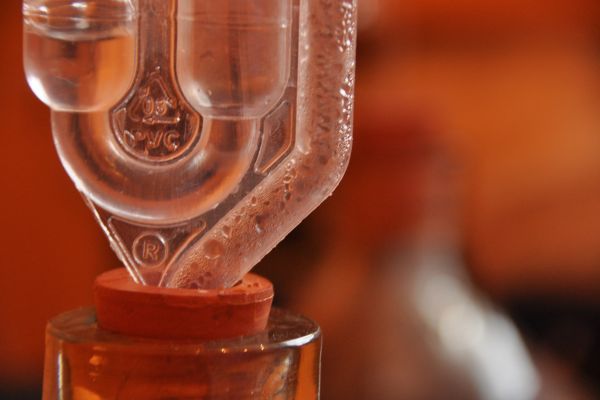
    Fermenting with Airlocks (How To Use An Airlock?)

    The art of brewing requires both technical skills and creative flair. One of the most critical components in homebrewing is the airlock. But what exactly is it and how do you use one? To put it simply, an airlock is a device that allows carbon dioxide to escape from your fermenter while preventing outside air…

  • Bucket Or Carboy For Secondary Fermentation?

    Bucket Or Carboy For Secondary Fermentation?

    You’ve brewed your first batch, and it’s now time to move on to the secondary fermentation process. But the question pops up: is a bucket or carboy better for secondary fermentation?. In simple terms, both buckets and carboys have their pros and cons. It all depends on your specific brewing needs and preferences. Personally, I…

  • How Many Calories Are In IPA Beers?

    How Many Calories Are In IPA Beers?

    When it comes to enjoying an ice-cold IPA, or India Pale Ale, after a long day or at social gatherings, many beer lovers often wonder: how many calories are in this delightful brew? Well, the answer to that question can vary, but on average, a standard 12-ounce serving of IPA contains around 200 calories. However,…

  • How Long Does It Take To Chill a Beer In A Fridge?

    How Long Does It Take To Chill a Beer In A Fridge?

    As an experienced brewer, I have often been asked the question, how long does it take to chill beer in a fridge? The answer is not as simple as it may seem, as it depends on a variety of factors such as the starting temperature of the beer, the size and type of the beer…

  • Is Secondary Fermentation Necessary For Wine?

    Is Secondary Fermentation Necessary For Wine?

    When it comes to the art of winemaking, there are many steps and techniques that are often debated among vintners. One of these is the process of secondary fermentation. Is secondary fermentation necessary for wine? Well, it depends. Not all wines require secondary fermentation, but it can be a crucial step for certain styles and…